Part of our Arizona Artificial Turf Guide.
Silica sand, zeolite, coated sand, crumb rubber, TPE — what each infill does, how they compare on heat and drainage, and what most Phoenix installers actually use.
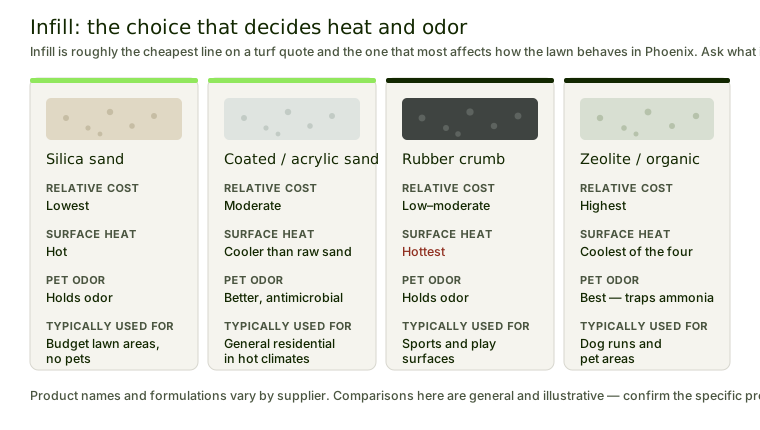
Most people shopping for artificial turf spend all their attention on the grass — pile height, color, how it feels underfoot — and none on what goes underneath it. That’s backwards. The infill is the layer of sand or granular material worked down into the turf fibers after installation, and it does more of the actual work than the blade does: it holds the fibers upright, weighs the turf down so it doesn’t shift, cushions footsteps, and helps drainage. It’s also one of the three things that genuinely move how hot your lawn gets in July — along with fiber color and shade.
What infill actually does
Infill isn’t optional padding. Without it, turf fibers mat down, the backing shows through in high-traffic spots, and the whole surface feels thin and cheap underfoot within a season or two. A properly infilled lawn keeps its blades standing, resists flattening, and drains rain and irrigation runoff down through the base instead of pooling on top.
The main types you’ll be quoted
- Silica sand — the baseline infill for most residential turf. Rounded, kiln-dried sand. Inexpensive, does the basic job of weighting and supporting fibers, but doesn’t do much for heat or odor control on its own.
- Coated sand (acrylic or antimicrobial coating) — silica sand with a polymer coating added, usually to reduce odor retention (a real consideration if you have dogs) or to improve heat performance slightly. More common in pet-focused installations.
- Zeolite — a porous volcanic mineral. Naturally absorbs ammonia, which makes it a popular upgrade for pet owners dealing with urine odor. Costs more than plain silica but is one of the more effective options for households with dogs. See the pet odor control guide for the full picture on what else helps.
- Crumb rubber — recycled tire rubber, ground fine. Common on sports fields and playgrounds because it cushions impact well. Less common in Phoenix backyards specifically because of the heat performance described below, though it still shows up in some installations, particularly athletic or play surfaces.
- TPE (thermoplastic elastomer) — a manufactured rubber-like infill, usually colored, sometimes used in place of crumb rubber where a cleaner-looking, lower-heat alternative is wanted. Runs at the premium end of infill pricing.
- Organic infills (cork, coconut fiber blends) — a smaller but growing category, marketed on being closer to natural soil and often paired with antimicrobial claims. Newer to the market than the others here, so track record in Arizona’s climate is thinner.
None of these is universally “best” — the right choice depends on whether you have pets, how much sun the area gets, and what you’re trying to solve.
Infill and heat — the part most sites skip
This is the fact that should actually drive your decision if you live somewhere that gets as hot as the Phoenix metro does. Independent lab testing from Penn State’s Center for Sports Surface Research measured surface temperature under identical heat-lamp conditions across infill types and found roughly a 20°F spread from the hottest to the coolest option — black rubber infill ran hottest, TPE ran meaningfully cooler under the same exposure.
Two things about that worth saying plainly. That testing used sports-surface materials under heat lamps, so the relative ranking transfers to a backyard but the absolute temperatures don’t. And infill isn’t the whole story — the same body of research found fiber color shifts surface temperature about as much as infill choice does, which cuts against the common assumption that infill alone explains turf heat. Shade beats both. (Full context is on our heat and surface temperature guide.)
That’s not a small difference when you’re deciding whether bare feet or paws can comfortably use the lawn in summer. If heat is a real concern for your household, ask directly what infill is being quoted and why, rather than assuming “infill is infill.”
What Phoenix installers typically use
For most residential jobs in this market, coated silica sand or a zeolite blend covers the two things homeowners actually ask about: basic performance and pet odor. Crumb rubber and TPE tend to show up more on dedicated play surfaces or putting greens than on a standard backyard lawn, partly on cost and partly on heat. None of this is a fixed rule — a good installer will ask about your household (kids, pets, sun exposure, how the space gets used) and infill should come out of that conversation, not a single default choice.
Questions to ask before you agree to an infill
- What infill is included in this quote, and what would upgrading to a different one cost?
- If we have a dog, what does this infill do about odor?
- How does this affect how hot the lawn gets in summer, and where is the yard’s sun exposure worst?
- How much infill goes down, and is reapplication or top-up covered later, or a separate service?
A contractor who can answer these without hedging has actually thought about your yard specifically, not just quoted a standard package.
Common questions
Does infill wear out or need replacing?
Infill does settle and compact over time and areas with heavy foot traffic or pets can need periodic top-up. That’s a maintenance question worth asking your installer or a turf cleaning service about directly, since it varies by traffic and infill type.
Can I change infill after installation?
Sometimes, though it typically means removing existing infill and adding new — not a simple swap. It’s much easier to get the right infill the first time.
Is more infill always better?
No — infill is specified to a target depth for a reason. Too little and fibers won’t stand up; too much and it can affect drainage and feel. This is a spec your installer should be getting right, not something to maximize on your own.
Ask your installer which infill they recommend for your yard, and why.
Who we are. Arizona Turf Company is a marketing website operated by Wilder West Assets, LLC. We are not a contractor. We do not install artificial turf and we do not hold an Arizona Registrar of Contractors license. Installation work is performed by independent, licensed Arizona contractors. We are compensated by the contractors we work with.
Verify before you hire. Confirm any contractor’s license status directly with the Arizona Registrar of Contractors before signing a contract or paying a deposit.
Arizona Turf Company is operated by Wilder West Assets, LLC — a marketing company, not a contractor. Installation is performed by independent licensed Arizona contractors.